Condenser vs Compressor | Which One Powers Your Cooling
- Hutchinson Heating and Air
- Aug 12, 2025
- 4 min read

When your air conditioner runs on a hot summer day, two major components work together to keep your home cool: the condenser and the compressor. Many homeowners confuse the two, often thinking they are the same part. But when we look closely at Condenser vs Compressor, it’s clear that while they work as a team, their functions are very different. Understanding the difference between condenser and compressor not only helps you know how your AC works but also makes it easier to spot problems early.
If you’re in need of reliable cooling performance or HVAC installation Murrieta & Temecula CA, knowing how these two parts function can help you make smarter repair and maintenance decisions.
Understanding the Basics of Your AC
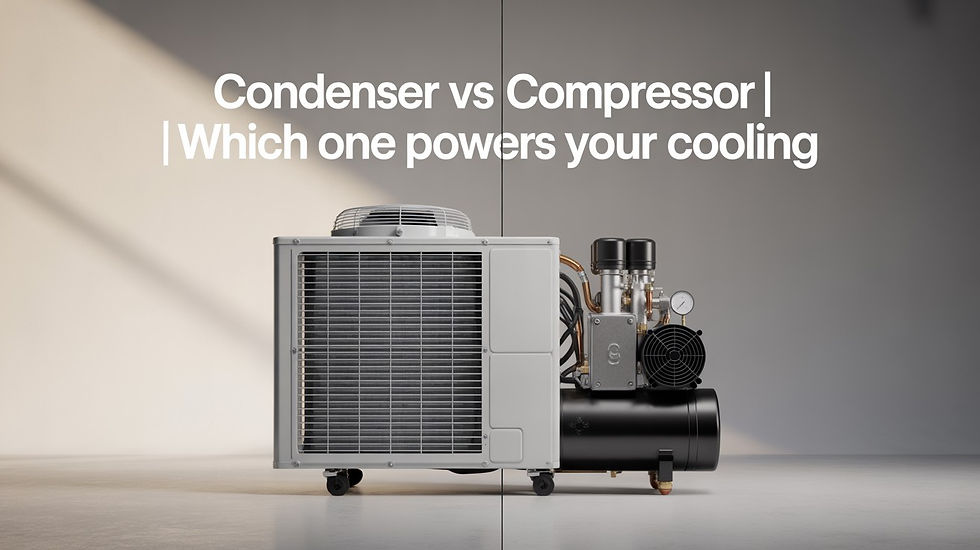
In any modern heating and air conditioning Murrieta & Temecula CA system, the condenser and compressor are critical parts of the cooling cycle. Your compressor is responsible for pressurizing the refrigerant and moving it through the system, while the condenser is responsible for releasing heat outdoors. Without one, the other can’t do its job, which means no cool air for your home.
Condenser vs Compressor | The Core Difference
When we talk about Condenser vs Compressor, the easiest way to understand their roles is to see them as two different stages of the cooling process. The compressor acts like the heart of your AC, pumping refrigerant through the system. The condenser, on the other hand, works like a heat releaser, taking the heat from inside your home and sending it outside.
Here’s the difference between condenser and compressor in simple terms:
The compressor compresses low-pressure refrigerant gas into a high-pressure, high-temperature gas.
The condenser takes that high-pressure gas, cools it down, and turns it into a liquid so it can cycle back through the system.
Without the compressor, the refrigerant wouldn’t move. Without the condenser, heat wouldn’t leave your home.
How the Compressor Works in Your AC
In AC condenser vs compressor comparisons, the compressor is often called the “engine” of the air conditioner. Located in the outdoor unit, it starts the cooling cycle by pulling in refrigerant gas from the evaporator coil inside your home. It then compresses this gas, increasing its pressure and temperature.
This high-energy refrigerant is then sent to the condenser, where it releases heat. A failing compressor can cause issues like warm air blowing from vents, strange noises, or the AC not starting at all.
How the Condenser Works in Your AC
In the Compressor vs condenser in HVAC debate, the condenser plays the role of a heat exchanger. After the refrigerant leaves the compressor, it flows into the condenser coils. A fan blows outdoor air over these coils, helping the refrigerant release heat.
Once cooled, the refrigerant turns into a high-pressure liquid and heads back indoors to absorb more heat from your living space. Problems with the condenser, such as clogged coils or a broken fan, can lead to poor cooling efficiency and higher energy bills.
Compressor vs Condenser Efficiency | Which Matters More?
When discussing Compressor vs condenser efficiency, the truth is that both matter equally. A high-efficiency compressor uses less energy to pressurize refrigerant, while an efficient condenser transfers heat faster.
If you have an older air conditioner, upgrading to a system with an inverter-driven compressor and enhanced coil technology can save on your cooling costs. This is why many homeowners in Murrieta & Temecula choose newer, energy-efficient systems when getting a full HVAC installation Murrieta & Temecula CA.
Maintenance Tips for Long-Lasting Performance
Both the condenser and compressor need regular care. Here’s how to keep them running efficiently:
Schedule yearly professional tune-ups to check refrigerant levels, clean coils, and inspect electrical connections.
Keep the outdoor unit free from debris like leaves and grass clippings.
Listen for unusual noises, which could be a sign of early failure.
If either part fails unexpectedly, you may need emergency HVAC services Murrieta & Temecula CA to restore cooling quickly.
Which One Powers Your Cooling?
The truth is that neither the condenser nor the compressor alone can power your cooling. It’s their teamwork that delivers the cold air you enjoy. Think of it like this: the compressor drives the refrigerant, and the condenser removes the heat. Without this partnership, your home comfort would suffer.
So, while people often compare AC condenser vs compressor, the smartest move is to keep both in great condition through proper maintenance and timely repairs.
Final Thoughts
Understanding Condenser vs Compressor can help you better care for your AC system and avoid costly breakdowns. Both components are equally important in providing efficient cooling for your home, and both require professional care for maximum performance.
If you need expert guidance, repairs, or a brand-new installation, visit Condenser vs Compressor | Which One Powers Your Cooling. Hutchinson Heating and Air Conditioning LLC offers top-quality heating and air conditioning Murrieta & Temecula CA services, including heating repair Murrieta & Temecula and emergency HVAC services Murrieta & Temecula CA. We make sure your AC runs smoothly in every season. For more information: Condenser vs Compressor | Which One Powers Your Cooling
FAQs
What is the main difference between condenser and compressor? The difference between condenser and compressor is that the compressor pressurizes refrigerant gas, while the condenser releases heat and turns the gas back into a liquid.
Can my AC work if the compressor fails? No. Without the compressor, refrigerant can’t circulate, meaning no cooling will occur.
Can a bad condenser damage the compressor? Yes. If the condenser can’t release heat effectively, it puts extra strain on the compressor, potentially causing it to overheat and fail.
Which part is more expensive to replace, the compressor or the condenser? In most cases, compressors are more expensive to replace due to their complexity and role in the system.
How can I make my AC condenser and compressor last longer?
Regular maintenance, cleaning, and professional inspections will extend the life of both components.


Comments